
A Yoga Teacher's Guide to Overcoming Imposter Syndrome & Building Your Online Presence

PARTNER CONTENT: This article was written exclusively for Accessible Yoga from our partner, OfferingTree.
By Katie Nissley
You finished your 200-hour training a few years ago and have been teaching the same class for a few years. Your classes fill up. You love what you do, and yet your confidence seems to disappear the moment you’re in front of a screen.
You have five saved drafts on Instagram that you’ll probably never post. You hesitate before sending your newsletter. You turn down the festival invitation. You close the app, minimize the tab, and walk away.
That feeling is imposter syndrome, and it keeps more good yoga teachers from sharing their knowledge than any algorithm ever could.
Imposter syndrome in the context of yoga teaching
Unlike the medicine or accounting fields, the U.S. doesn't regulate yoga teaching. A 200-hour training and a lineage-based apprenticeship both produce someone who can call themselves a yoga teacher. That openness keeps the door open for teachers who came up outside formal structures—but it also means there's no standardized moment where someone tells you you're officially qualified. A lot of teachers spend years waiting for permission that never comes.
Shawna Krueger, yoga teacher and host of the Leadership and Yoga Podcast, knows this well. She completed her first 200-hour training online during the pandemic, then walked straight into an in-person audition where the studio owner had every student in the room critique her class. She was asked to come back the following week. She ended up getting hired, but the experience left a mark.
"It's such a bummer that a lot of people's teaching experience starts out really critical," she says, "because what we need when we're first getting started is to figure out what our voice is."
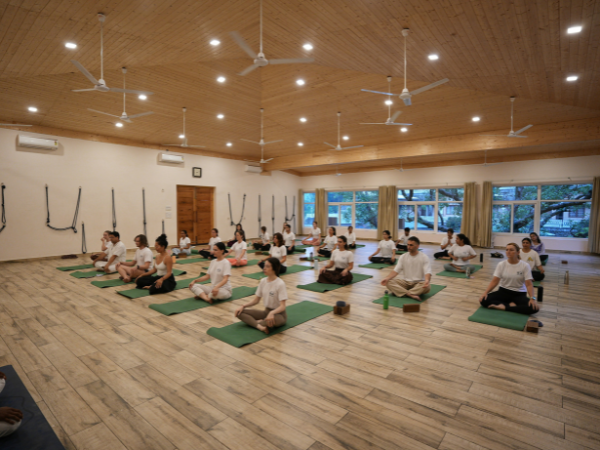
She spent the next few years finding hers—a second training, posting before she felt ready, sitting with the silence when things didn't land. By the end of 2025, she had 10,000 followers and a podcast pulling 20,000 downloads per episode—built entirely on showing up before she felt qualified to.
Shawna is also clear that not all self-doubt is imposter syndrome.
"There is such a thing as rightful imposter syndrome where we genuinely haven't done the necessary steps yet." The work is learning the difference between not being ready and just never feeling ready.
In the Yoga Sutras, Patanjali writes that the true definition of yoga is in the “stilling of the fluctuations of the mind,” not mastery of the body. As long as you acknowledge what you know and don’t know, you’re completely qualified to share it.
Why online presence triggers imposter syndrome
When you cue the wrong side in class (if you know, you know), it’s easy to correct. Your students are brought back into the present, see you’re human, and the moment passes. Sharing content online creates a different type of pressure.
"Converting my personal Instagram into a yoga account felt like a second puberty," Shawna says. "Like going through changes in front of the world."
A lot of mainstream yoga content still centers able, flexible, thin, white bodies. Teachers trained in accessible yoga can feel like they're pushing against an entire visual language just by showing up. With the right setup, a teacher with 10 years of experience and a teacher with 10 months of experience can look identical online.

"You are not everybody's teacher," Shawna says, "and you never will be, and until you're okay with that, you'll be stuck trying to please everyone."
When you’re holding back, trying to appeal to everyone, it shows up in your classes. Your students will feel the difference. The same is true of a post.
Shawna puts it this way: "If you are nervous, it means you're ready. If you're scared, it means you're unprepared. Nerves are about caring."
Imposter syndrome often masquerades as fear when it's really just evidence that you care about doing this well.
How to move through it
Moving through imposter syndrome is about separating yourself from Asmita, the attachment to the ego, and leaning into Svadhyaya, self-inquiry.
When the inner critic starts, separate yourself from the voice and lean into what’s true. Ask yourself, What do I actually know? What have I witnessed? What has my practice taught me? Your experience is valid. Share the question a student asked about the Kleshas that you had to sit with. The Sutra you keep returning to. The cue change that made a pose finally land. The steps you take along the journey are often what people connect with the most.
Shawna says the fear of silence is what actually stops most teachers from posting: "The worst part isn't negative comments, it's the silence. That's what we're really afraid of. The feeling of not having anybody listening, like what I'm saying must not be good enough.”
Her most-shared piece of content was a love letter to her teachers—something she almost didn't post because it felt too personal. It became the thing that resonated most.
Meditation is a non-negotiable for Shawna because she believes presence is directly linked to the creative process. So many things that land well online are incredibly obvious, stated in a beautifully simple way. The best way to have those ideas is to be in a state of deep presence. If you share something created from presence and it comes from the heart, you don't have to worry so much about the results. That's the difference between posting to be seen and posting to connect.
Come back to your why. Think about the impact you’ve already made, and want to make. The first time a student said, “Thank you for class today, that was exactly what I needed." The student who told you it was the first pain-free movement they’d had in two years. Your purpose will still be there for you on days your confidence isn’t.
Approach each email or Instagram post from a lens of service. What do I want to share with my ideal reader? What do they need to hear?
Getting clear on your audience helps too. Start by identifying and researching the audience you want to reach. Once you know what your students value, you can feel a lot more confident building content for them.
Jivana Heyman, the founder and director of Accessible Yoga, says that accessible yoga isn’t about offering modifications, but instead “celebrating our students’ differences.” If yoga teachers let imposter syndrome hold them from posting online, this trickles down to their students. If all teachers look the same, all students will look the same, and students will continue to be excluded. We need more representation of different kinds of people teaching yoga—different bodies, abilities, stories.
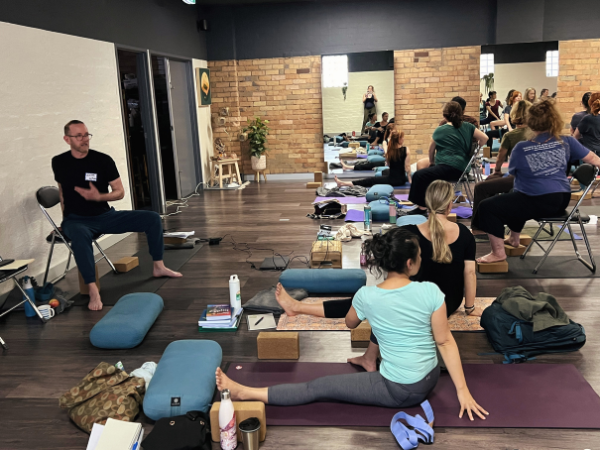
It took Shawna time to believe that people like her belonged online too. The more she was able to believe it, other people began to believe it about themselves.
Reframing what it looks like to show up online
You don’t need to post videos of yourself doing asana, the physical practice of yoga, to grow your online presence. Choose one place where your community already exists, and show up there reliably.
And you can't know what works until you start.
"If you don't start, you have no data to work with," Shawna says. "You don't know what works or doesn't."
The person searching ChatGPT or YouTube for “chair yoga for MS” or “yoga for chronic pain” is already looking for you. They just need somewhere to land. When algorithms change, your social media accounts can lose reach overnight. Your website is the one place online that belongs entirely to you. It’s where students can read about your approach, understand who you teach, and book a class without having to rely on someone else’s platform. Options like OfferingTree's website builder were designed specifically for yoga teachers.
Search can be especially powerful for accessible yoga teachers because your students are often searching for specific terms that generic yoga content might not address. Wherever you show up online, be specific about who you’re for. If you’re trained in teaching yoga for chronic pain, make that clear on your website. The goal is for the right student to land on your page and immediately think this is for me.
You don’t need a complex website to make a difference. Set up four key pages: homepage, about me, offerings, and a contact me page.

If you’re still hesitant about social media, start with email. Email is the most direct relationship you have with your community—a short note, a new class you’re teaching, a free yoga nidra practice. Small and consistent beats ambitious and sporadic every time. OfferingTree's email tools keep that connection in the same place as your website and booking.

Social media works great as a discovery tool that points people back to your website and email list. When you go to create content, think about what you share during or after class. Come back to the questions your students ask: How do I do this post without putting weight on my wrists? I can’t get on the floor. Can I still practice? Why do I feel anxious when I practice certain pranayama techniques? Turn those questions into posts or short videos. Repurpose the content. An article you write about seva can become a post on Instagram, linking back to your blog. The teaching you already do is your content, it just needs a place to live.
What to do next
The teachers who look like they have it all figured out online usually don't. Certain teachers have a decade head start. Others have marketing budgets. The person you're comparing yourself to has entirely different goals and starting points than you do. Start where you are.
The voice telling you that you need one more training, a better photo, a clearer niche, or more confidence is delaying the work that's needed right now. There are still too few yoga teachers like you visible online. Every time another one shows up, the practice gets more honest.
As Shawna puts it: "It's beautiful to face your imposter syndrome for yourself, but it's also beautiful to know that the more you free yourself, the more you free other people around you. That's an incredible chain reaction."
You don't have to have it figured out. You just have to begin.
Ready to build your online home? The Accessible Yoga community gets a free trial of OfferingTree plus 50% off the first three months or 15% off the first year on all plans—website, booking, payments, and email in one place.
About the Author
Katie Nissley is the Partnerships Coordinator at OfferingTree. Katie is also a health and wellness professional, certified personal trainer, and yoga teacher whose career has lived at the intersection of movement, mindfulness, and mission-driven organizations. With academic roots in health and wellness promotion and organizational leadership and learning, Katie brings a
human-centered lens to the business side of wellness. She first began teaching yoga in 2015 and has spent her career in the non-profit yoga world and wellness technology since. Katie writes for wellness professionals who want to lead with both heart and clarity.
