
A Revolution of Kindness

by Jivana Heyman
I’ve been wondering if we’ll ever have justice for the victims in the Epstein files and whether any of these evil rich and powerful people will see repercussions for their deplorable actions. I’m feeling so much frustration at a system that seems to reward evil and punish good. I recognize the system was designed this way, but that doesn’t make it any easier to witness. Currently ICE is arresting immigrants who are simply trying to build a good life for themselves and their families, while we’re allowing actual criminals to walk free.
When I try to sit in meditation, I’m distracted by thoughts of good things happening to bad people and bad things happening to good people. It’s all upside down.
I know this has something to do with karma, but when I go back to the yoga teachings, I find most of the conversation around karma unsatisfying. I’m not comfortable with the idea that our current circumstances are the result of our actions from past lives, like we all deserve what is happening to us.
I know karma is more complex than that. Karma is about embracing this moment and recognizing that choosing our next action is the only thing in life we have any control over.
The analogy for karma that is always used in the teachings is that of an archer. There are a bunch of arrows that they’ve already shot. Some are in the target and some scattered around; those are past actions. The archer’s quiver is filled with arrows that they will shoot in the future. But the only thing they can control at this moment is where to shoot the arrow that is currently in their bow. The only thing they get to decide is what they will do at this very moment.

Get Up and Fight
When I read the Bhagavad Gita, I see a call to action, a fight for good over evil. Krishna chides Arjuna: “This despair and weakness in a time of crisis are mean and unworthy of you, Arjuna. How have you fallen into a state so far from the path to liberation? It does not become you to yield to this weakness. Arise with a brave heart and destroy the enemy.” (Bhagavad Gita*, 2.2-3)
It’s compelling to try and equate Arjuna’s situation with our own. But I hesitate to recommend we fight a battle of good against evil. That’s an overly simplistic approach that has been co-opted by Christian nationalists to defend their white supremacy.
Personally, I don’t support violence, but I know we need a revolution now. This is a time for dramatic political change that arises from the goodness of humanity and our desire for fairness. We are already seeing it in the streets of Minneapolis and through the example of the people of Iran. People are waking up and acting for the common good. They are acting out of love for their neighbors.
Perhaps the fight for good over evil is more about creating the world we want to see, rather than allowing depraved billionaires to create it for us? Let our revolution be a positive movement built on care and compassion; a revolution of kindness.
How to Start a Revolution
I’m not a politician, but I was deeply involved in ACT UP, a grassroots direct action AIDS activist group in the 80s and 90s. I saw the power that protests and direct action can have. The power of speaking truth to power without fear. We avoided violence, but we made strong, clear statements about what we wanted, and that is the key to political change.
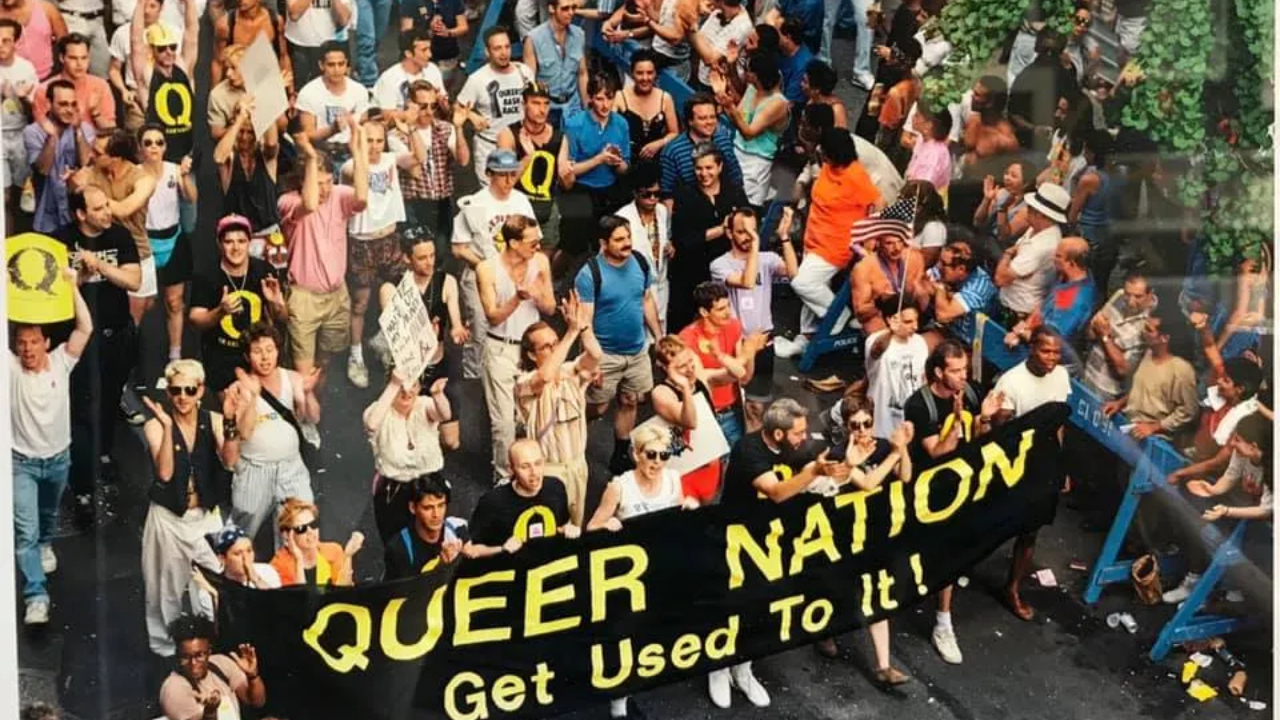
I often reflect on that time and consider what factors led me to put my body on the line and get arrested over and over again. I think the choice to take action is really the key to karma, and the key to revolution.
Personally, I’m incredibly shy and very much an introvert. I sat at those ACT UP meetings for years before I got up the courage to speak up and join the demonstrations? and contribute in an active way. I needed time to sit with my feelings and my choices. I was stewing in grief and anger over the illness and death of so many of my close friends. But I still couldn’t act. I was paralyzed and overwhelmed.
It reminds me of how Arjuna describes himself at the very beginning of the Gita, when he tells Krishna that he can’t fight this battle. He says, “I am weighed down with weakmindedness; I am confused and cannot understand my duty. I beg of you to say for sure what is right for me to do. I am your disciple. Please teach me, for I have taken refuge in you.” (Bhagavad Gita, 2:7)
Then in the next very well-known section of the text, Krishna smiles and teaches Arjuna how to practice yoga. In particular, he teaches him how to practice karma yoga. He explains that yoga is skill in action. Unlike the way it is portrayed in the media these days, yoga is an engaged spirituality focused on loving service to the world.
Karma yoga is action based on kindness and love, without expectation. Krishna explains, “I am ever present to those who have realized me in every creature. Seeing all life as my manifestation, they are never separated from me. They worship me in the hearts of all, and all their actions proceed from me. Wherever they may live, they abide in me. When a person responds to the joys and sorrows of others as if they were their own, they have attained the highest state of spiritual union.” (Bhagavad Gita, 6:30-32)
When we see ourselves in others, and experience their joy and sorrow as our own, then we are forced into action. It’s okay to take your time, and to sit with your feelings. Feel your grief and anger at a world that feels unjust and immoral, and then when you’re ready take the leap and act.
*Bhagavad Gita translations by Eknath Easwaran
